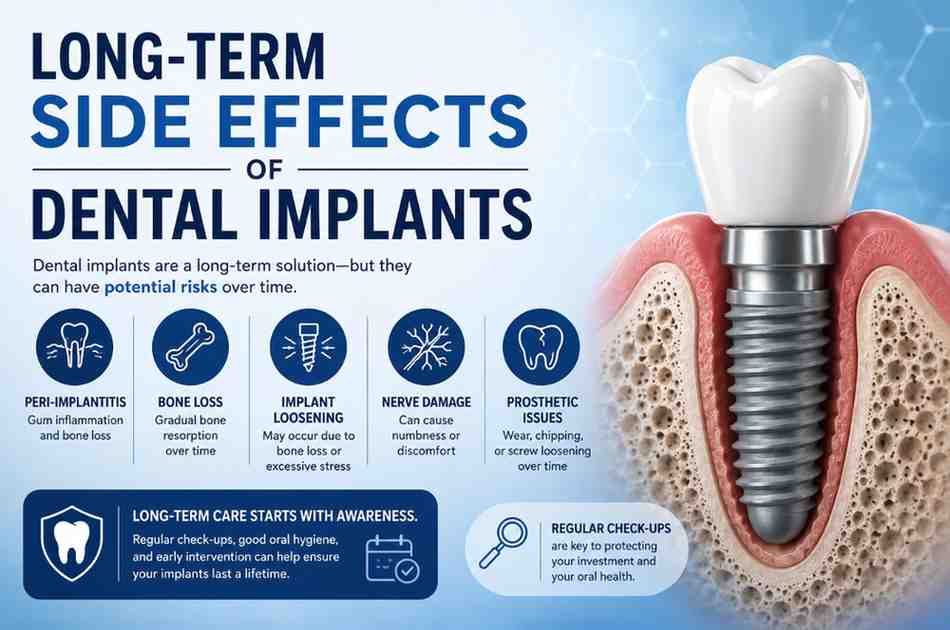
Side effects of dental implants are a common concern for people considering this advanced tooth replacement option. Dental implants are highly successful and can restore confidence, chewing ability, and speech for many years. However, being informed about potential long-term side effects of dental implants helps you make confident decisions and maintain excellent results.
This guide is designed for middle-aged adults (35–60+), working professionals, and seniors in Hyderabad and urban India who are exploring permanent solutions for missing teeth due to age, decay, injury, or gum disease. It offers balanced, practical information for those prioritizing long-term oral health while maintaining busy lifestyles.
While the success rate of dental implants exceeds 95% in most cases, understanding risks like infection, bone loss, and peri-implantitis allows for better prevention and early intervention.
What Are Dental Implants?
A dental implant is a titanium or zirconia post surgically placed into the jawbone to act as an artificial tooth root. Once healed (osseointegration), an abutment and crown are attached to restore natural appearance and function. Implants work well for single teeth, bridges, or full-mouth restorations.
They do not decay like natural teeth, but the surrounding gums and bone still require dedicated care.
Common Long-Term Side Effects of Dental Implants
Most patients enjoy trouble-free implants, but awareness of possible side effects of dental implants is essential:
1. Peri-Implantitis (Infection Around the Implant)
This is one of the most discussed long-term side effects of dental implants. Similar to advanced gum disease, peri-implantitis involves inflammation and infection of the gums and bone around the implant.
Symptoms include swelling, bleeding, pus, bad breath, and eventual bone loss. Risk factors: poor oral hygiene, smoking, uncontrolled diabetes, and irregular dental visits.
2. Progressive Bone Loss
Over years, bone supporting the implant may resorb due to infection, uneven bite forces, or untreated gum issues. Early bone loss often shows no pain, making routine X-rays crucial for monitoring.
3. Implant Loosening or Failure
Though rare long-term, implants can loosen if osseointegration fails or due to excessive forces (e.g., bruxism/teeth grinding), heavy smoking, or systemic conditions. Failure rates are higher in smokers.
4. Gum Recession
Gums may pull back from the implant crown, exposing metal parts and affecting aesthetics—especially on front teeth. Causes include thin biotype gums, aggressive brushing, or poor implant positioning.
5. Nerve Damage or Sensory Changes
Rare but possible if an implant is placed near nerves. This can cause persistent tingling, numbness, or pain in the lips, chin, or gums. Proper 3D imaging (CBCT scans) during planning greatly reduces this risk.
6. Sinus Issues (Upper Jaw Implants)
Implants in the upper back jaw may occasionally protrude into the sinus cavity, leading to sinus pressure, infections, or discomfort. Sinus lifts are sometimes performed preventively.
7. Prosthetic Complications
The crown, bridge, or denture on the implant may loosen, chip, fracture, or wear over time due to chewing forces or material fatigue. These are usually fixable without affecting the implant itself.
8. Other Rare Issues
- Allergic reactions to materials (very rare with titanium)
- Aesthetic changes over decades
- Difficulty cleaning leading to food impaction
Warning Signs You Should Not Ignore
Contact your dentist promptly if you notice:
- Persistent pain or swelling months/years after placement
- Bleeding, pus, or foul taste
- Loose implant or crown
- Difficulty chewing
- Receding gums or exposed implant threads
Early action often saves the implant.
How to Minimize Side Effects of Dental Implants
Prevention is the best strategy for long-term success:
- Maintain impeccable oral hygiene: Use soft brushes, interdental brushes, water flossers, and antimicrobial rinses.
- Attend regular check-ups (every 3–6 months initially).
- Quit smoking and manage diabetes or bruxism.
- Wear night guards if you grind teeth.
- Follow your dentist’s aftercare instructions strictly.
Dental Implant Care at ADS Dental Hospital, Hyderabad
ADS Dental Hospital in Ameerpet and Gachibowli specializes in implant dentistry with 25+ years of experience. Their team offers advanced planning with 3D scans, high-quality implants, and expert management of complications like peri-implantitis or bone grafting.
Whether you’re getting new implants or need evaluation of existing ones, professional care can help extend their lifespan.
Contact:
- Gachibowli: +91-7330621059
- Ameerpet: +91-9989691114
- Email: info@adsdentalhospitals.com
Book a consultation today for a thorough assessment.
Conclusion
Understanding the side effects of dental implants—such as peri-implantitis, bone loss, gum recession, and prosthetic issues—empowers you to enjoy the benefits while minimizing risks. With experienced surgeons, quality materials, and diligent home care, most patients experience decades of comfortable, natural-looking results.
Don’t let fear of potential complications stop you from a better smile. Early planning and consistent maintenance make dental implants one of the most reliable long-term solutions available.
Frequently Asked Questions
What are the long-term side effects of dental implants?
Can dental implants cause gum infection after many years?
Can dental implants become loose over time?
Can dental implants cause nerve problems?
How can I avoid long-term dental implant complications?