
 By ADS International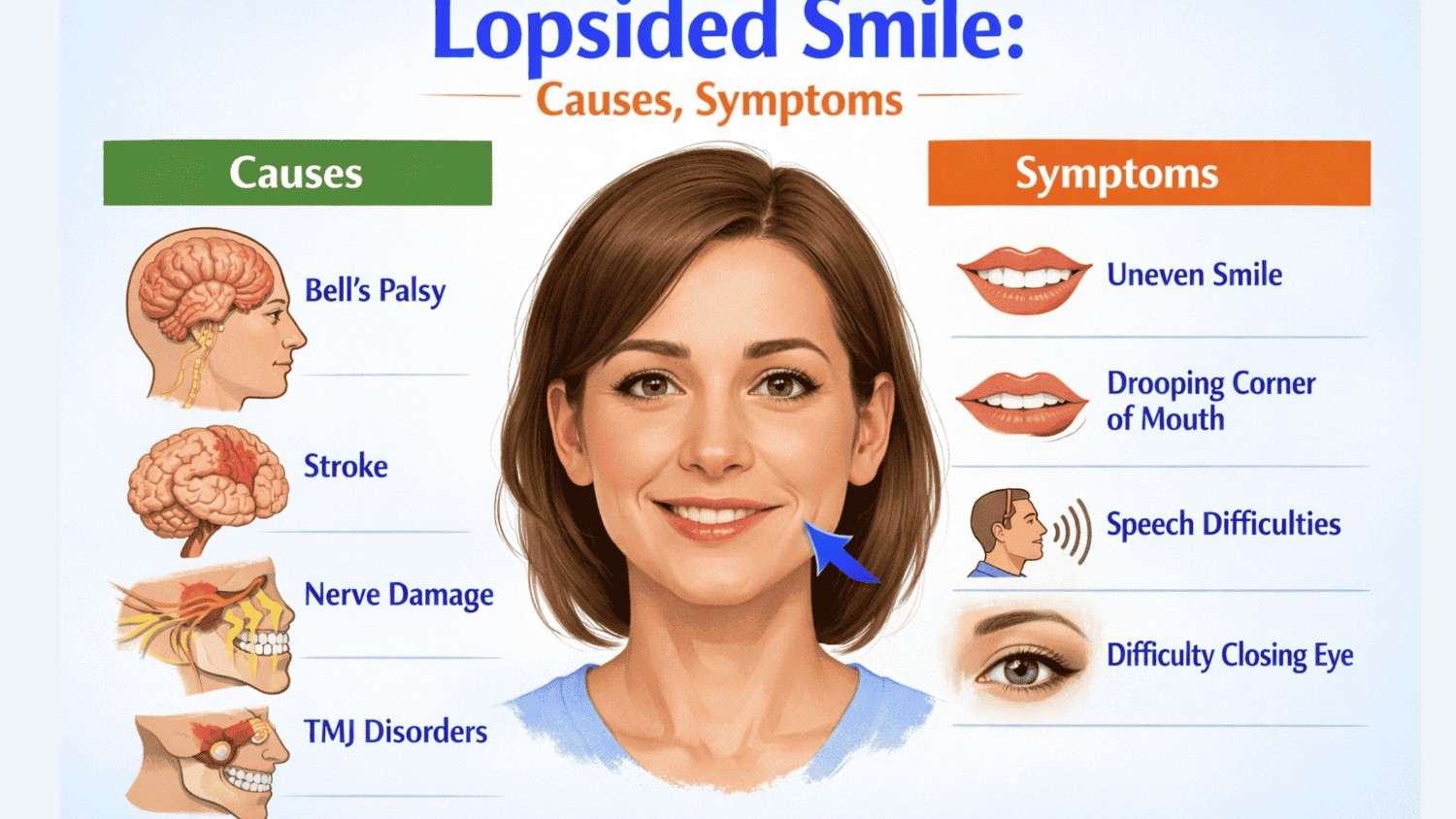
A lopsided smile—also called an uneven or crooked smile—can catch you off guard in a mirror or photo, making you wonder: “Why does only one side lift properly?” For many, it’s a subtle quirk they’ve lived with forever, barely noticeable. But when it appears suddenly or worsens, it can spark real concern, even fear.
The good news? Most cases are harmless and fixable, from simple dental tweaks to non-invasive treatments. Yet, ignoring a sudden change risks missing a serious issue like a stroke. This guide covers everything: causes, red flags, and practical ways to restore symmetry and confidence.
Table of Contents
– Mild facial asymmetry is normal; perfect symmetry is rare.
– Common causes include genetics, dental misalignment, aging, or muscle imbalance.
– Sudden lopsidedness may signal emergencies like stroke or Bell’s palsy—act fast.
– Fixes range from orthodontics and Botox to exercises or surgery, depending on the root cause.
– Consult a professional for personalized advice, especially if changes are recent.
A lopsided smile occurs when one corner of the mouth rises higher, lower, or pulls differently than the other during smiling.
This creates an uneven, asymmetrical appearance. While everyone has some natural facial asymmetry (one eye slightly higher, one cheek fuller)
A noticeable lopsided smile often stems from underlying factors affecting muscles, nerves, teeth, or jaw.
Many factors contribute to an uneven smile, ranging from benign to medical.
Natural Facial Asymmetry and Genetics — Slight differences in bone structure, muscle strength, or tooth alignment are inherited and common. Genetics often play a key role in jaw shape or tooth positioning.
Dental Issues — Misaligned or uneven teeth, missing teeth, crooked teeth, or uneven gum lines can make a smile appear crooked. Conditions like malocclusion (poor bite) or TMJ disorders exacerbate this.
Jaw Misalignment — An asymmetrical jaw, overbite, underbite, or crossbite shifts how the mouth moves, leading to one-sided pulling.
Muscle Imbalance — Overactive or weak facial muscles (like the zygomaticus major) cause uneven lifting. This can develop from habits or natural variation.
Aging — Loss of collagen, muscle tone, and bone density over time can subtly shift facial symmetry.
Lifestyle Factors — Smoking accelerates jaw deterioration; childhood habits like thumb-sucking contribute to misalignment.
Medical and Neurological Causes — These are more serious:
– Bell’s palsy: Sudden inflammation of the facial nerve causes temporary one-sided weakness or paralysis, often viral-triggered.
– Stroke or transient ischemic attack (TIA): Brain-related damage leads to facial droop.
– Facial nerve damage from trauma, surgery, infections, or rare conditions like tumors.
An abrupt change is the biggest red flag. If your smile suddenly becomes lopsided, especially with other symptoms, it could indicate a stroke. Use the FAST test:
– **F**ace: Ask the person to smile—does one side droop?
– **A**rms: Can they raise both arms evenly?
– **S**peech: Is speech slurred or difficult?
– **T**ime: Call emergency services immediately if yes.
Bell’s palsy mimics stroke but typically develops over hours/days, affects the entire face side (including forehead wrinkling), and lacks limb weakness, confusion, or speech issues.
Stroke often involves body-wide symptoms and forehead sparing in some cases. Differentiate quickly—time matters for stroke treatment.
Beyond uneven smiling, look for:
– Drooping eyelid or inability to close one eye
– Drooling or trouble eating/drinking
– Pain near the ear or jaw
– Altered taste or hearing sensitivity
– Facial twitching or numbness
If these accompany sudden onset, seek urgent care.
– Sudden onset: Head to the ER for stroke evaluation.
– Gradual or persistent: See a dentist for teeth/jaw issues, neurologist for nerve concerns, or ENT/plastic surgeon for facial symmetry.
– Aesthetic concerns only: A cosmetic dentist or oral surgeon can help with non-medical fixes.
Early intervention prevents complications like eye damage (from poor closure) or chronic asymmetry.
Treatment depends on the cause—many options restore balance effectively.
For Dental/Jaw Causes:
– Orthodontics: Braces or clear aligners (e.g., Invisalign) straighten teeth and correct bite.
– Veneers/crowns: Mask uneven teeth or gaps for instant symmetry.
– Gum recontouring: Lasers reshape uneven gums.
– Jaw surgery (orthognathic): For severe misalignment.
– Dental implants: Replace missing teeth to support even structure.
For Muscle/Nerve Imbalance:
– Facial exercises: Targeted routines strengthen weaker sides (e.g., mirror practice smiling evenly, resistance with fingers). Hold poses 60 seconds for mild cases.
– Botox injections: Relax overactive muscles on the stronger side for quick balance (results last 3-6 months).
– Dermal fillers: Add volume to sunken areas for symmetry.
For Serious Conditions (e.g., post-Bell’s palsy or permanent paralysis):
– Physical therapy and nerve treatments.
– Advanced surgery: Muscle transfers, nerve grafts, or facial reanimation procedures.
Lifestyle/Prevention Tips: Quit smoking, maintain oral hygiene, address habits early, and protect against facial trauma.
Results vary—mild cases improve with non-invasive methods; complex ones need multidisciplinary care.
Is a lopsided smile always serious?
No—most are benign (genetic/dental) and not emergencies.
Can exercises fix it?
Yes, for mild muscle issues; combine with professional guidance.
How long do treatments take?
Botox: days for results; orthodontics: months to years; surgery: longer recovery.
What’s the difference between a crooked, uneven, and lopsided smile?
They’re interchangeable terms for asymmetry in smiling.
A lopsided smile doesn’t have to hold you back.
Whether it’s a lifelong trait affecting your confidence or a new change prompting worry, understanding the cause is the first step to a balanced, natural grin.
Consult a healthcare provider for tailored advice—many people achieve symmetry and smile freely again.